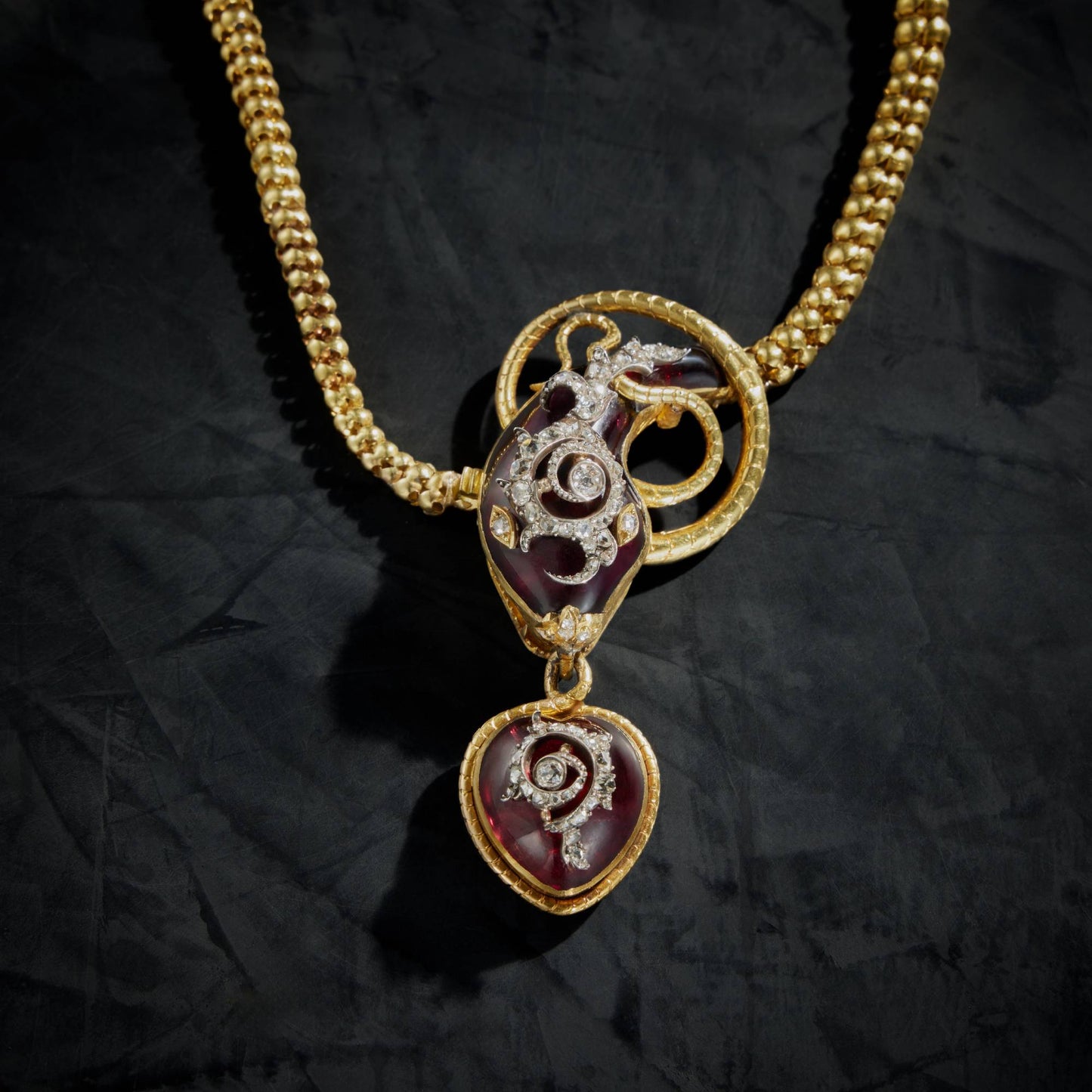
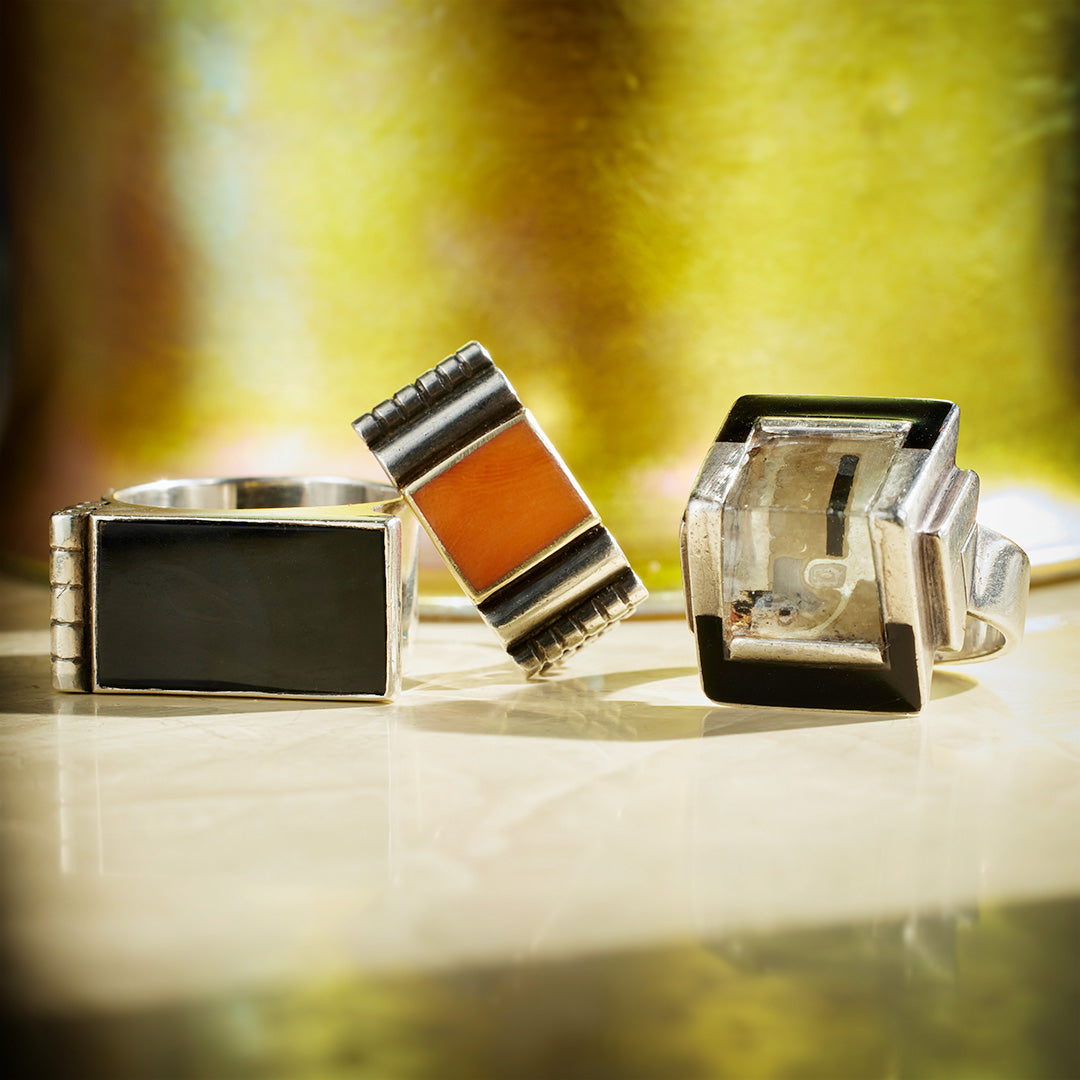
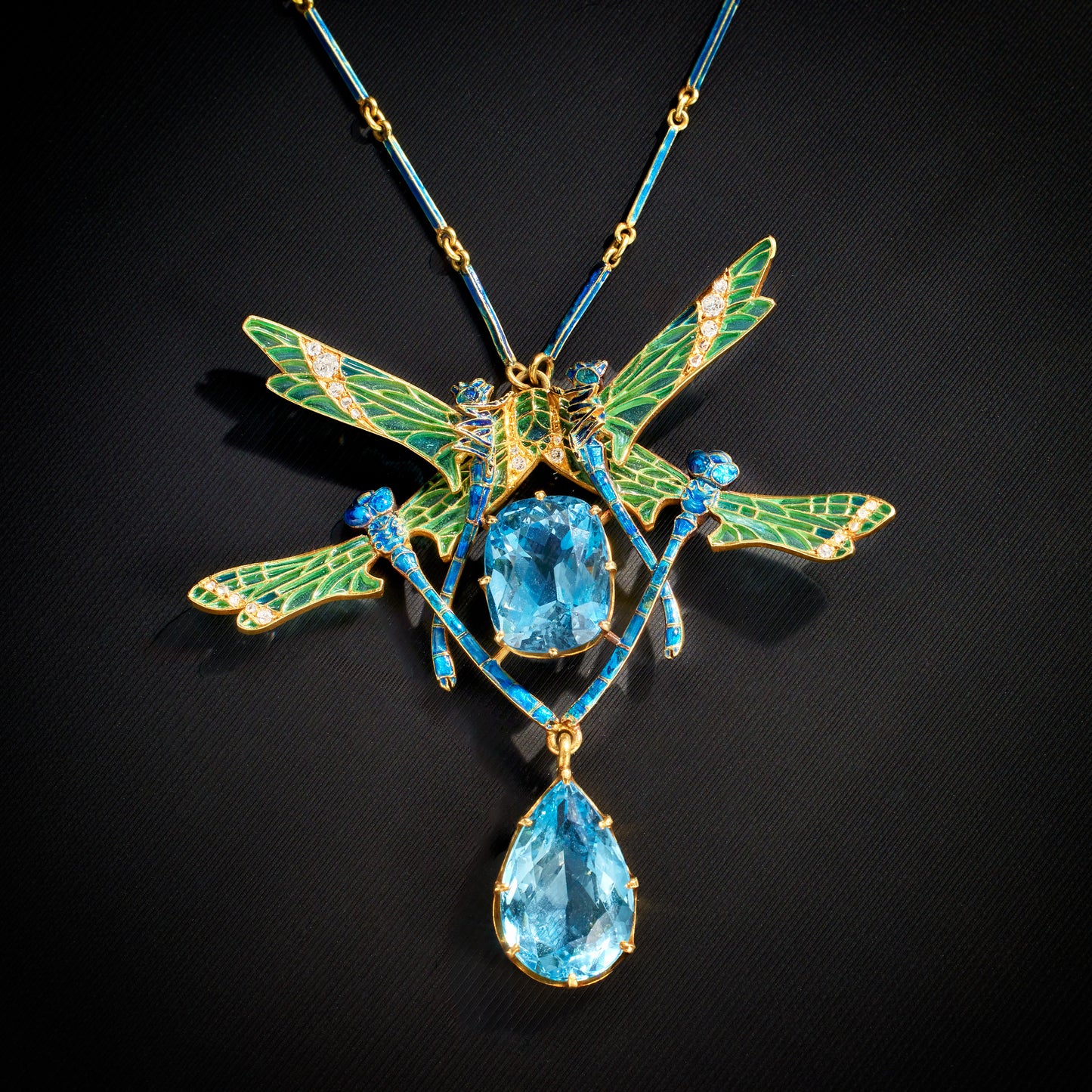
Lucien Gaillard’s work is rather unknown to the general public. Even though his production was limited, Lucien Gaillard, like Lalique, Vever and Fouquet, was one of the greatest and most original designer of his time. A Jeweler of the late nineteenth century, he produced many jewelry pieces that were particularly complex and which are now preserved in renowned institutions such as the Musee d’Orsay in Paris. Gaillard came from a long line of jewelers, the story begins with Auguste who for years made gold jewelry in his Parisian workshop. His son Amedee founded Maison Gaillard in 1840, the studio was located in the Quartier de L’horloge, an epi center of jewelry making in Paris at the time. Around 1860, he left the studio to his son Ernest who took his son, Lucien as his apprentice. Lucien continued to produce outstanding jewelry, and was concomitantly an accomplished artisan who designed and produced glassware and bronze sculptures.
His finely chiseled objects brought him recognition amongst his contemporaries and he is the heir of a long line of designers who never ceased to innovate and to refine their research and techniques. This constant search for perfection can be found in the outstanding quality of his work. Gaillard doesn't burden himself with detail and gets down to the essential by improving the nature of the materiel which is enhanced by the quality of the sculpture, chiseling and patinas. Amongst the precious objects created with taste and refine imagination by Gaillard are combs, jewelry, perfume bottles, and bronze vases similar to the one we are presenting. In most of his work one finds the content of his art highlights the influence of Japanese art which is reflected in the shapes, the themes or yet again in the color schemes or the chosen material. This vase by Lucien Gaillard is an iconic example of the use of Japanese imagery that was dear to him, but also of the help he received in his workshop by Japanese artisans. The rhinoceros beetle is a type of beetle that can only be found in japan, they are used as a street game where two males are placed on a piece of wood and push each other until one falls. In countless cultures, the beetle is a symbol of force and luck. Gaillard chose the strongest materials for his representation of the rhinoceros beetle, creating this vase in bronze and wood. His training as a jeweler along with the refined inspiration from the Japanese culture made his work one of a kind.